Buying an electric two-wheeler in India in 2026 is no longer simply about finding the scooter with the highest claimed range. Buyers now have more choices across different price points, battery sizes, performance levels and ownership models.
For a daily commuter, practicality and running cost may matter most. A family buyer may want more storage and a comfortable seat, while another rider may prioritise acceleration, range or connected features.
That is why there is no single electric two-wheeler that is perfect for everyone.

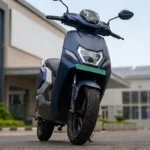
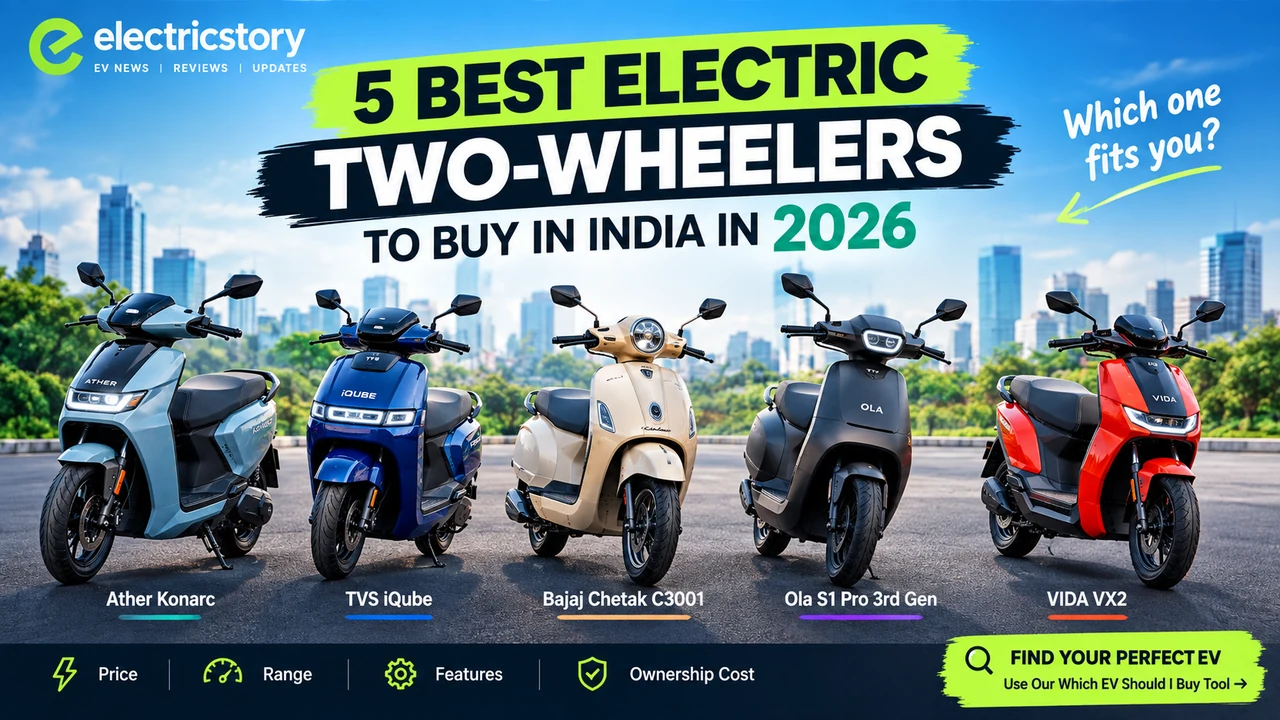
Based on the current Indian market, five models that deserve attention in 2026 are the Ather Konarc, TVS iQube, Bajaj Chetak C3001, Ola S1 Pro 3rd Gen and VIDA VX2. Each targets a different type of buyer.
And if you are still confused about which EV actually matches your budget, daily running, charging availability and riding requirements, you can use the ElectricStory Which EV Should I Buy tool to get a more personalised shortlist.
Try the ElectricStory Which EV Should I Buy tool
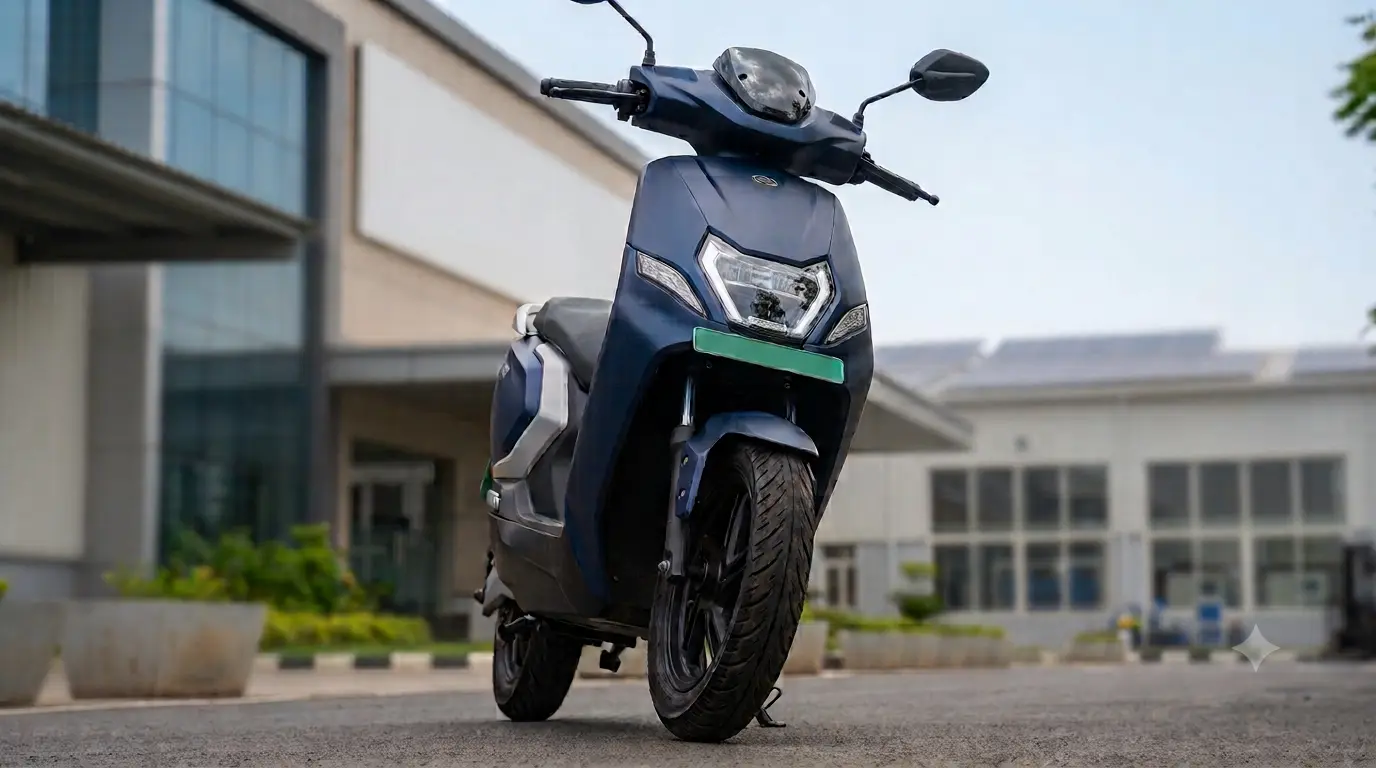
1. Ather Konarc — For Buyers Looking for a New-Age Mass-Market EV
The Ather Konarc is one of the most important additions to Ather’s 2026 lineup.
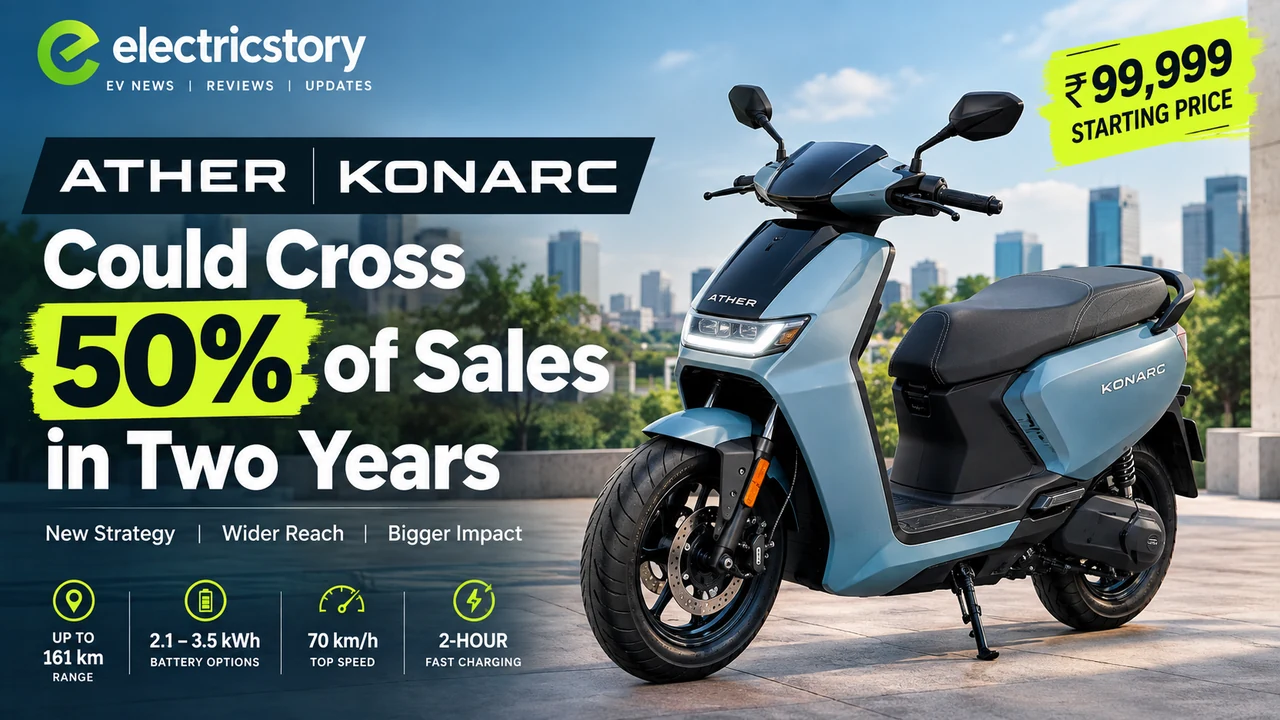
Ather currently lists the Konarc with a starting price of ₹99,999. The company is positioning it as a more accessible electric scooter aimed at everyday riders rather than only performance-focused EV buyers.
The Konarc is available with different battery configurations, while Ather lists IDC range options of up to 161 km for the currently available versions. A 200 km IDC version is also planned for a later stage.
The scooter has a 70 km/h top speed and battery options ranging from 2.1 kWh to 3.5 kWh depending on the variant.
Why consider the Konarc?
- Starting price of ₹99,999
- Up to 161 km IDC range currently listed
- Multiple battery options
- 70 km/h top speed
- Designed for everyday urban riding
- Ather connected features and ecosystem
The Konarc makes sense for buyers who want an electric scooter from an established EV-focused manufacturer without moving into the higher-priced performance segment.
Best suited for: Daily city commuters and buyers looking for a modern Ather at a lower entry price.
2. TVS iQube — A Strong Choice for Family Buyers
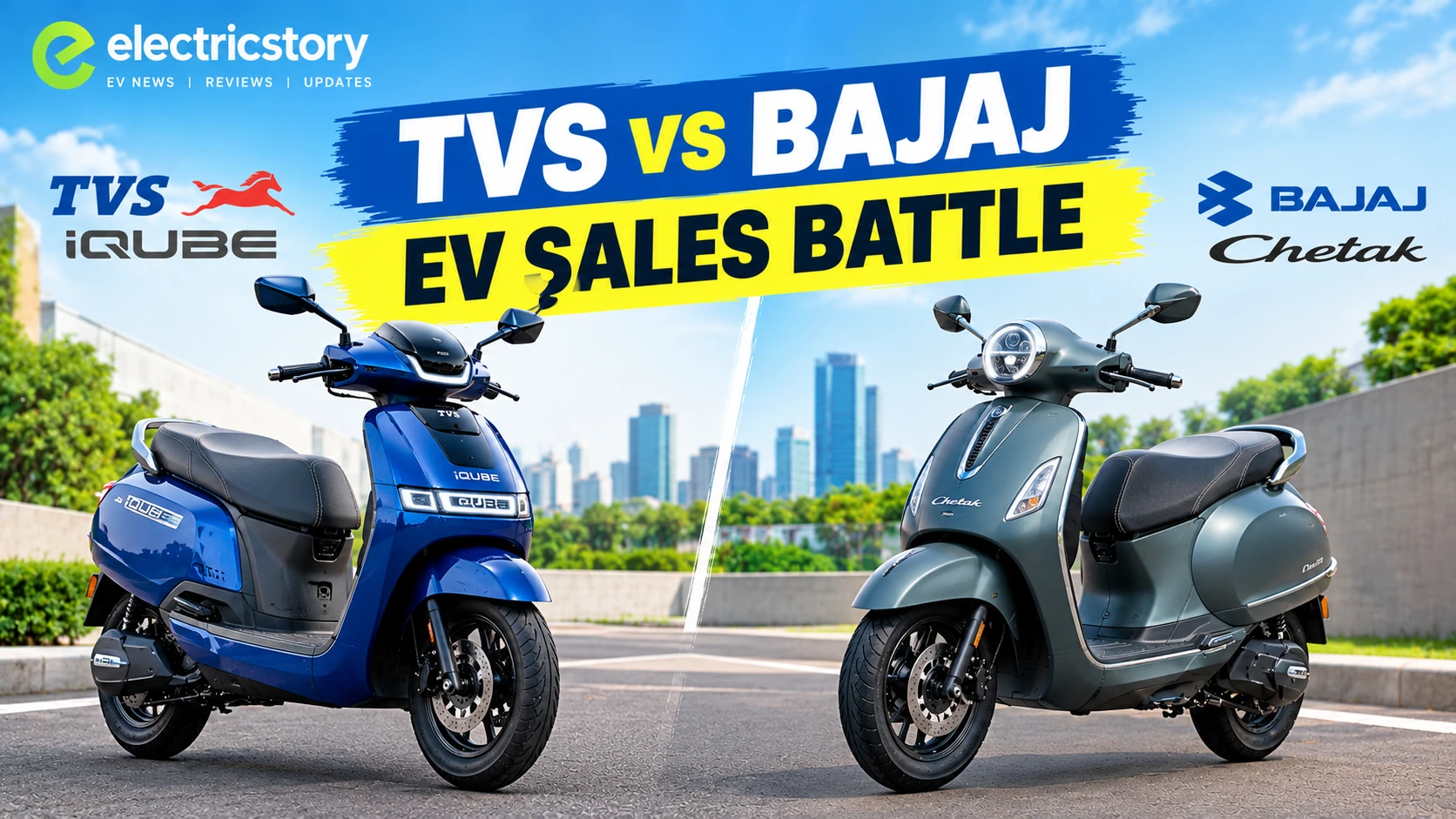
The TVS iQube has become one of the most established electric scooters in India’s mainstream market.
One of its biggest strengths is the sheer variety of configurations. TVS currently lists versions ranging from the 2.3 kWh iQube to the 5.3 kWh iQube ST. Depending on the variant, the claimed IDC range goes from 114 km to 212 km.
The entry version has a listed effective ex-showroom price of ₹95,124 after applicable incentives shown by TVS, while the higher-capacity iQube ST 5.3 kWh is listed at ₹1,46,877 effective ex-showroom. Actual prices can vary depending on location, taxes, incentives and other charges.
The iQube is also designed around everyday usability. TVS highlights features such as connected functions, navigation, hill-hold functionality and access to more than 2,000 charging locations.
Why consider the iQube?
- Wide range of battery options
- Up to 212 km IDC range on the 5.3 kWh version
- Family-friendly design
- Multiple variants for different budgets
- Large established manufacturer and service ecosystem
- Connected features
For someone who wants a familiar family-scooter experience rather than an aggressively styled performance EV, the iQube remains an important model to consider.
Best suited for: Families, office commuters and buyers who want multiple battery and price options.
3. Bajaj Chetak C3001 — For Value and Classic Design
The Bajaj Chetak continues to appeal to buyers who want an electric scooter with a more traditional design.
The Chetak C3001 is one of the more accessible models in the current Chetak range. Bajaj’s official website lists it at ₹1,14,270 ex-showroom Bengaluru, with a 3.0 kWh battery and a claimed 131 km range on its model page.
The scooter has a 70 km/h top speed and supports Eco and Sports riding modes.
It also gets features such as Bluetooth connectivity and reverse mode.
The Chetak’s design is an important part of its appeal. Instead of looking dramatically different from a conventional scooter, it retains the familiar Chetak styling while using an electric powertrain.
Why consider the Chetak C3001?
- 3.0 kWh battery
- Up to 131 km claimed range on the official model page
- 70 km/h top speed
- Eco and Sports modes
- Reverse mode
- Familiar Chetak styling
Buyers who prefer a conventional-looking scooter and want a well-known two-wheeler manufacturer may find the Chetak worth considering.
Best suited for: Buyers who value design, brand familiarity and straightforward everyday usability.
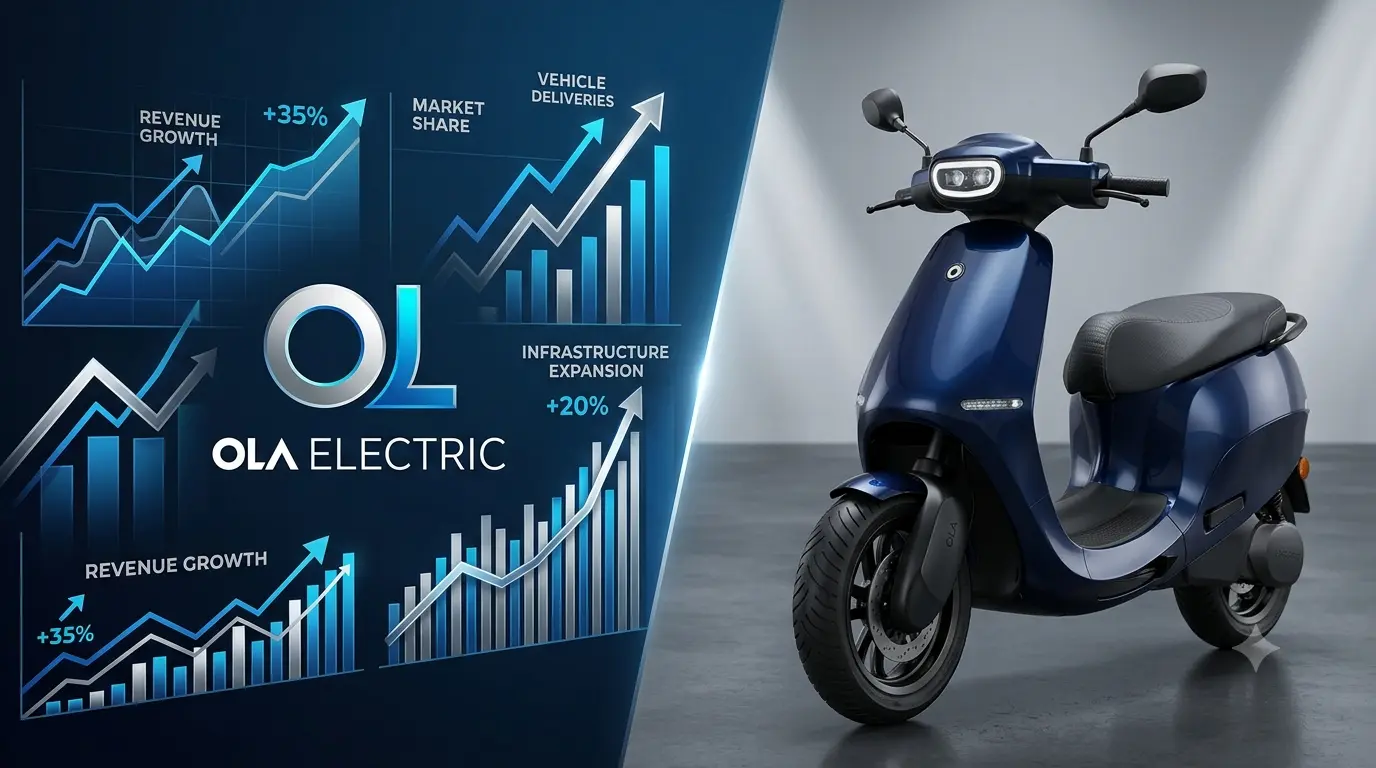
4. Ola S1 Pro 3rd Gen — For Performance and Range
If performance is high on your priority list, the Ola S1 Pro 3rd Gen deserves a place on the shortlist.
Ola’s current booking platform lists the S1 Pro 3rd Gen with 3 kWh and 4 kWh battery configurations. The 3 kWh version is listed with a 176 km IDC range and 117 km/h top speed, while the 4 kWh version is listed with a 242 km IDC range and 125 km/h top speed.
That puts the S1 Pro 3rd Gen into a different category from slower city-focused electric scooters.
The combination of a high claimed range and higher top speed makes it particularly interesting for riders who want stronger performance along with everyday usability.
Why consider the S1 Pro 3rd Gen?
- Up to 242 km IDC range on the 4 kWh version
- Up to 125 km/h top speed
- 3 kWh and 4 kWh options
- Strong acceleration-focused positioning
- Large connected EV ecosystem
However, buyers should compare the exact variant, final on-road price, local service availability and current offers before booking.
Best suited for: Riders who prioritise performance, acceleration and higher claimed range.
5. VIDA VX2 — For Flexible Battery Ownership
The VIDA VX2 takes a different approach to electric scooter ownership.
Its key attraction is the availability of removable battery configurations on selected versions. VIDA currently lists VX2 Go variants with 3.4 kWh, 3.1 kWh and 2.2 kWh battery options. The claimed IDC range varies from 93 km to 146 km depending on the version.
The 3.4 kWh version is listed with a 146 km IDC range and a removable battery, while the 2.2 kWh version offers a 93 km IDC range.
The VX2 also has a 70 km/h top speed and supports Eco and Ride modes.
Removable batteries can be particularly useful for buyers who live in apartments or locations where charging an electric scooter directly at the parking spot is difficult.
Why consider the VIDA VX2?
- Removable battery option
- Multiple battery capacities
- Up to 146 km IDC range
- 70 km/h top speed
- City-focused design
- Useful option for buyers with charging constraints
Best suited for: Apartment residents and buyers who want more flexibility around charging.
5 EV Scooters, 5 Different Buyer Needs
| Electric two-wheeler | Best suited for | Key highlight |
|---|---|---|
| Ather Konarc | Everyday commuters | ₹99,999 starting price |
| TVS iQube | Families | Up to 212 km IDC range |
| Bajaj Chetak C3001 | Value and classic design | 3.0 kWh battery |
| Ola S1 Pro 3rd Gen | Performance riders | Up to 125 km/h |
| VIDA VX2 | Flexible charging | Removable battery options |
The specifications above are based on manufacturer-listed figures and can vary by variant, city and configuration. Claimed IDC range should not be treated as guaranteed real-world range.
Which Electric Two-Wheeler Should You Buy?
This is where choosing an EV becomes more complicated.
A buyer travelling 20 km every day does not necessarily need the same scooter as someone travelling 60 km. Someone with home charging has different requirements from an apartment resident without a dedicated parking socket.
Budget also matters.
For example, a ₹1 lakh budget can lead you toward completely different choices than a ₹1.5 lakh budget. Similarly, someone who regularly carries a pillion may prioritise comfort and practicality over acceleration.
You should therefore consider at least these factors before buying:
Your Budget
Decide your maximum purchase budget before looking at individual models. Also check the final on-road price rather than relying only on an advertised ex-showroom figure.
Daily Running
Calculate how many kilometres you normally travel every day.
A person travelling 15–20 km may have very different battery requirements from someone travelling 50–70 km.
Home Charging
If you have a dedicated charging point at home, most conventional electric scooters become easier to live with.
If you live in an apartment or have limited charging access, removable batteries or a strong public charging network may become more important.
Pillion Usage
If you regularly ride with another person, look at seat comfort, footboard space, suspension, braking and overall weight rather than concentrating only on range.
Range Requirement
Don’t choose a scooter only because its IDC range number looks impressive.
Real-world range can change with speed, rider weight, traffic, temperature, road conditions, tyre pressure and riding style.
Performance
Some buyers want relaxed city commuting, while others want quicker acceleration and a higher top speed.
Choose according to your actual riding pattern rather than paying extra for performance you rarely use.
Still Confused? Let ElectricStory Choose the Shortlist for You
With so many electric scooters available in India, manually comparing every battery size, range figure, price and feature can quickly become confusing.
That is exactly why ElectricStory created the Which EV Should I Buy tool.
Instead of simply showing you a long list of electric scooters, the tool is designed around your actual requirements.
You can enter details such as:
- Your budget
- Daily riding distance
- Monthly kilometres
- Whether you have home charging
- Pillion usage
- Your main priority
- Your city
- Highway usage
The tool can then help narrow down the models that match your requirements.
Find the EV That Fits Your Needs
Use the ElectricStory Which EV Should I Buy tool →
Instead of asking “Which EV is the best?”, the better question is:
“Which EV is best for my requirements?”
That small difference can save you from buying a scooter that looks impressive on paper but doesn’t suit your daily life.
Final Take
The Indian electric two-wheeler market in 2026 offers choices for almost every type of buyer.
The Ather Konarc focuses on making Ather more accessible. The TVS iQube continues to target practical family use with a wide range of variants. The Bajaj Chetak C3001 brings a familiar design and straightforward electric scooter package. The Ola S1 Pro 3rd Gen is aimed at buyers who want stronger performance and higher claimed range, while the VIDA VX2 offers battery flexibility that can be useful for riders with charging limitations.
There is no universal winner because every rider’s requirements are different.
Before spending more than ₹1 lakh on an electric two-wheeler, check your budget, daily distance, charging situation, pillion requirements and expected range.
And if you don’t want to compare everything manually, let ElectricStory’s Which EV Should I Buy tool narrow down the options for you.