The Indian electric scooter market has just entered a new price battle.
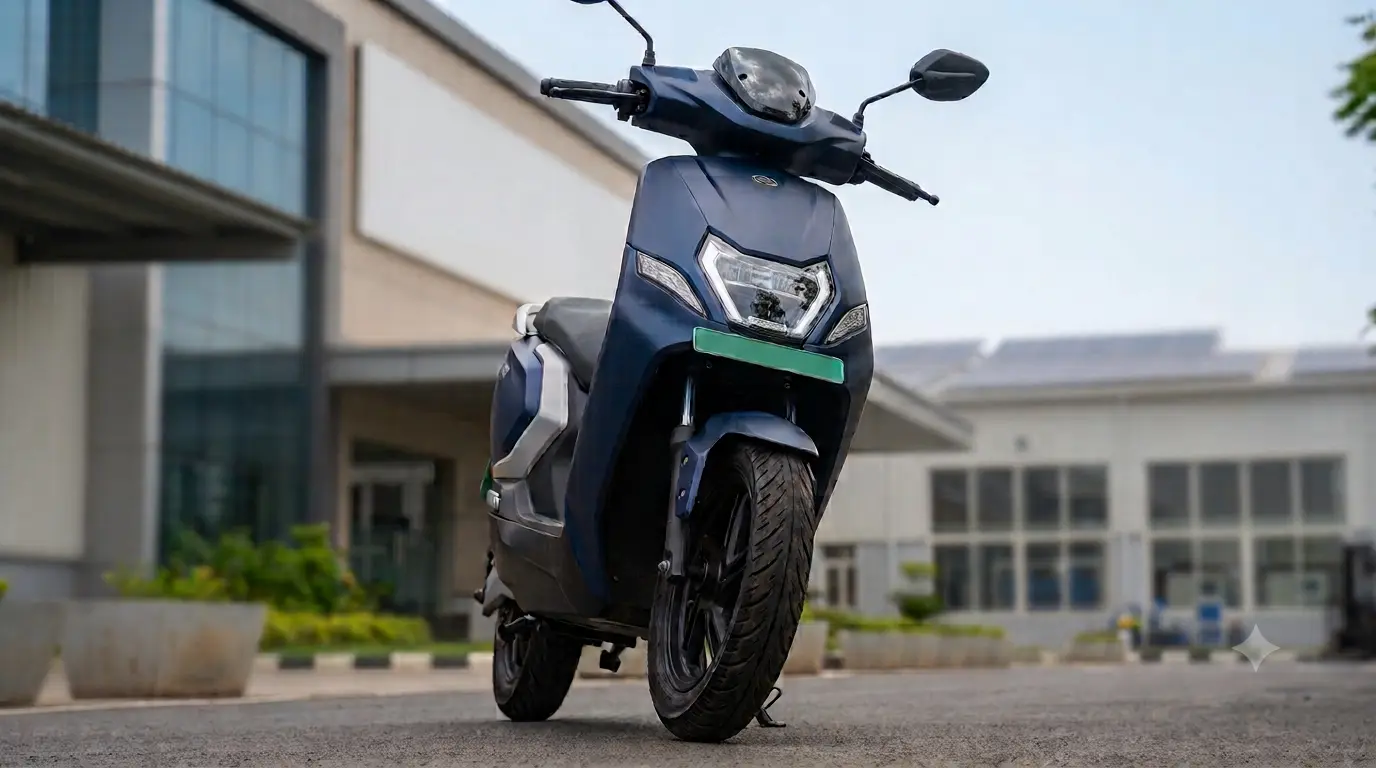
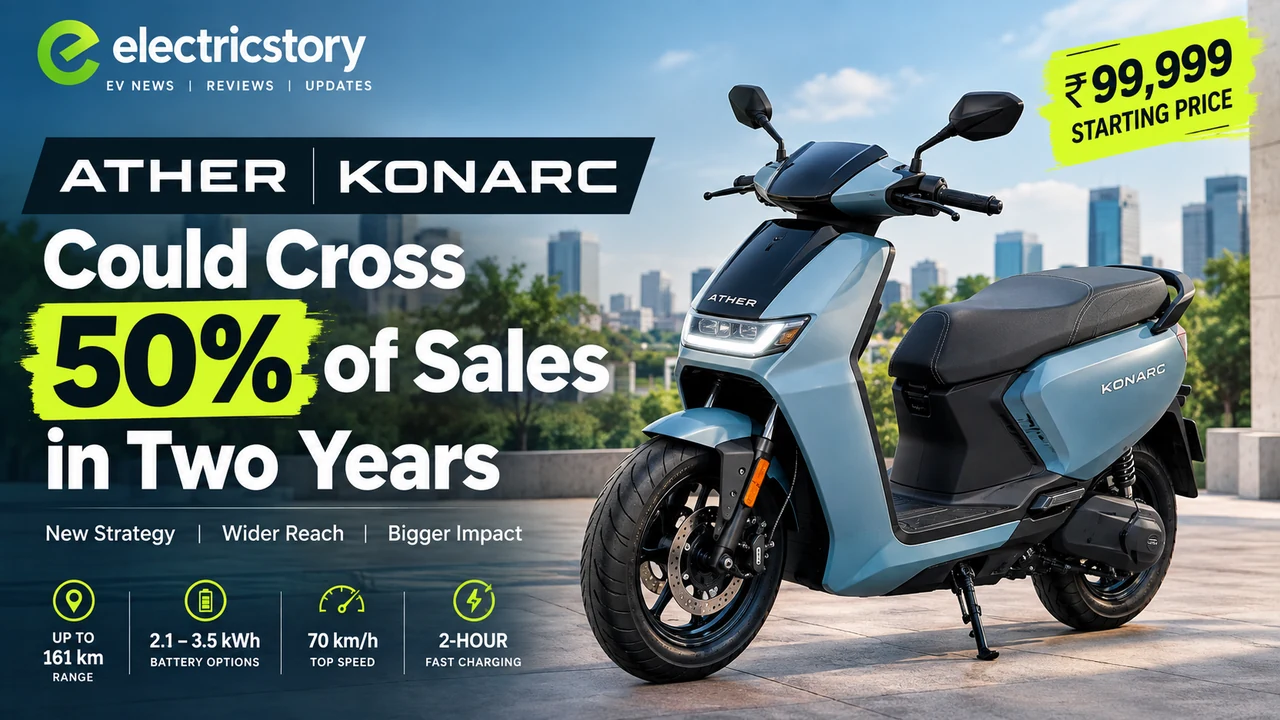
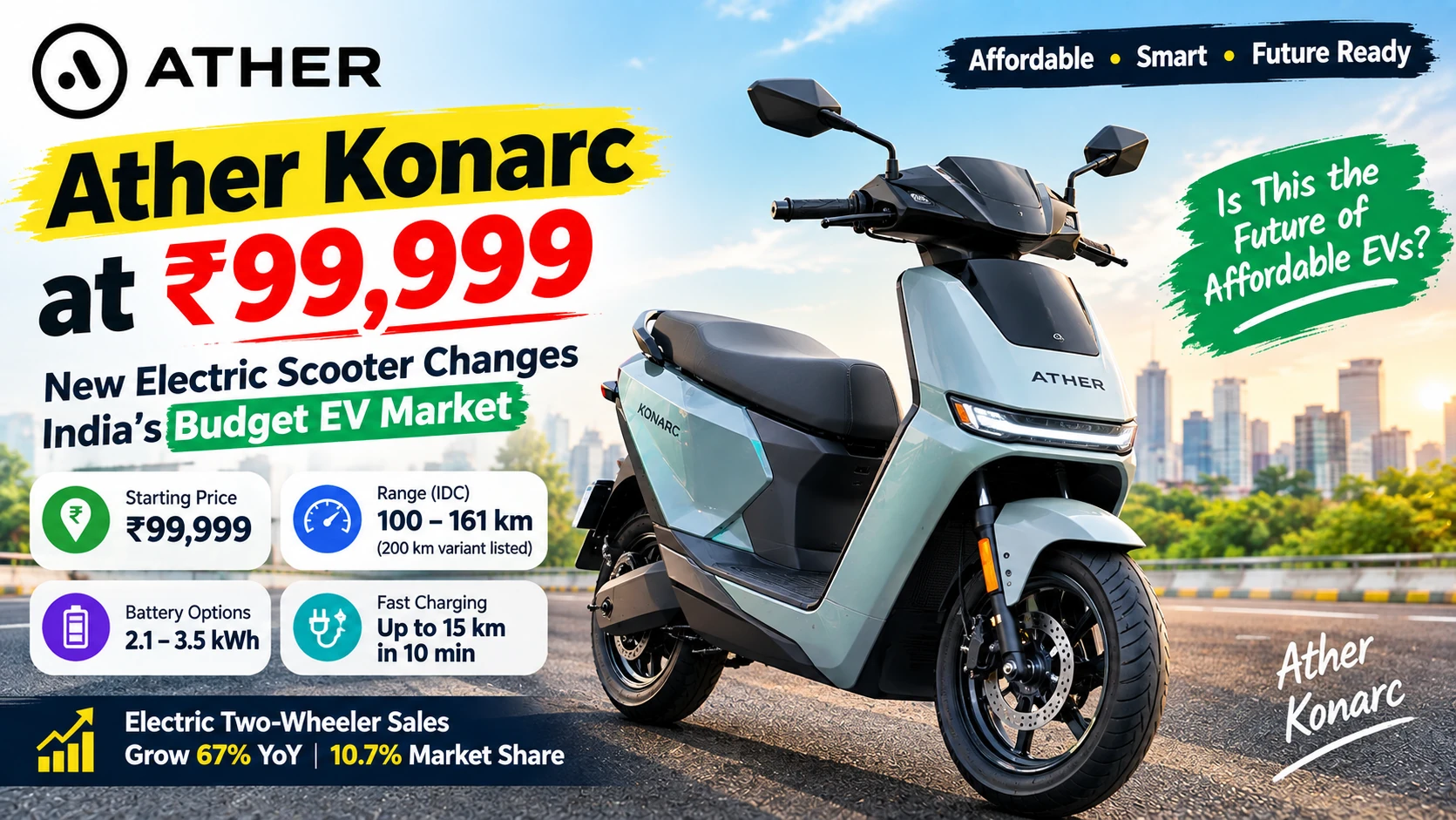
Ather Energy has launched the Ather Konarc, a new electric scooter designed to take the brand into the mainstream market. With an introductory effective ex-showroom price starting at ₹99,999, the Konarc brings Ather into direct competition with some of India’s most affordable electric scooters.


But the price is only part of the story.
The new Konarc comes with a metal body, steel unibody chassis, 14-inch wheels, long-travel suspension, connected technology and multiple battery and range configurations. Ather says the Konarc family will eventually offer IDC range options reaching up to 200 km.
This launch comes at an important time because electric two-wheelers are gaining ground rapidly across India.
India’s Electric Two-Wheeler Market Is Growing Fast
The latest sales numbers show just how quickly the market is changing.
In August 2026, electric two-wheeler registrations reached 1,83,204 units, according to FADA data reported by Business Standard. That was a 67.1% increase compared with August 2025.
Electric two-wheelers accounted for 10.7% of India’s overall two-wheeler market in August, compared with 7.7% during the same month a year earlier.
The market did experience a month-on-month decline from July, but July itself had crossed the 2 lakh monthly-sales mark for the first time. Cumulative electric two-wheeler sales during the first eight months of 2026 had already crossed 13.6 lakh units.
That makes the timing of the Konarc particularly interesting.
Ather Finally Enters the ₹1 Lakh Battle
Ather has traditionally been associated with technology-focused electric scooters such as the 450 series.
The Konarc changes that strategy.
The new scooter starts at ₹99,999, making it Ather’s first electric scooter to enter the sub-₹1 lakh category. The company has positioned it as a product for everyday users rather than only technology-focused premium EV buyers.
Ather’s official website currently lists the Konarc starting at ₹99,999.
This puts the company into a segment where buyers are also comparing electric scooters with familiar petrol scooters.
That price positioning could make the Konarc one of the most closely watched new electric scooters of 2026.
Konarc Range: 100 km, 125 km and 161 km Variants
The Konarc is not a single battery configuration.
Ather’s official specifications list three currently detailed Konarc S variants with claimed IDC ranges of:
- 100 km
- 125 km
- 161 km
Ather also lists a 200 km IDC version in the broader Konarc lineup, although that version is not currently available for sale.
The currently detailed variants have different battery capacities.
The 100 km version uses a 2.1 kWh battery, while the 125 km version gets a 2.7 kWh battery. The 161 km version uses a 3.5 kWh battery.
However, buyers should remember that IDC range is a test-cycle figure.
Ather’s own TrueRange figures are lower. The company lists approximately 80 km TrueRange for the 100 km IDC model, 100 km for the 125 km version and 130 km for the 161 km version.
That distinction is important when comparing the Konarc with other electric scooters.
What Does the ₹99,999 Konarc Offer?
The entry-level Konarc S comes with several practical features.
Ather lists a metal body and steel unibody chassis, 14-inch alloy wheels, long-travel suspension, silent gear drive and a 31-litre boot.
The scooter also has reverse assist and AutoHold.
The entry 100 km version uses a 4.2-inch DeepView display, while higher variants receive a 7-inch display and additional connected features.
The scooter is therefore not simply a stripped-down low-cost EV.
Ather appears to be trying to combine a more affordable price with features associated with its established product range.
Charging Is Another Important Part of the Story
The Konarc supports home charging as well as charging through Ather’s charging network on supported variants.
The official specifications show a 450W onboard charger.
The 100 km version takes approximately four hours to charge from 0 to 80% using the standard home-charging setup. The 125 km version takes around four hours and 30 minutes, while the 161 km version takes approximately five hours and 40 minutes.
Ather also offers a combined charging setup on selected versions.
According to Ather, compatible fast charging can add up to 15 km of range in 10 minutes on the Ather Grid, depending on the variant.
For daily commuters, this could be more important than simply having a large battery.
Ather Is Also Talking About Battery Warranty
Battery life remains one of the biggest questions for people considering an electric scooter.
The standard Konarc battery warranty is three years or 30,000 km.
AtherStack Pro provides an upgrade to five years or 60,000 km, while additional extended warranty options can take coverage to eight years or 80,000 km or even 10 years or 1,00,000 km, subject to the applicable package and terms.
This is worth checking carefully before purchasing because warranty coverage can significantly affect long-term ownership confidence.
One Service Visit a Year
Ather is also trying to reduce one of the common complaints around vehicle ownership: frequent service visits.
The company says the Konarc comes with a service interval of 12 months or 10,000 km, whichever comes first.
That means a typical commuter may not need to visit the service centre as frequently as with a conventional scooter.
Actual maintenance requirements will still depend on usage and local conditions.
The ₹1 Lakh EV Battle Is Getting Serious
The most interesting part of the Konarc launch is not just Ather’s new scooter.
It is the growing competition around the ₹1 lakh price point.
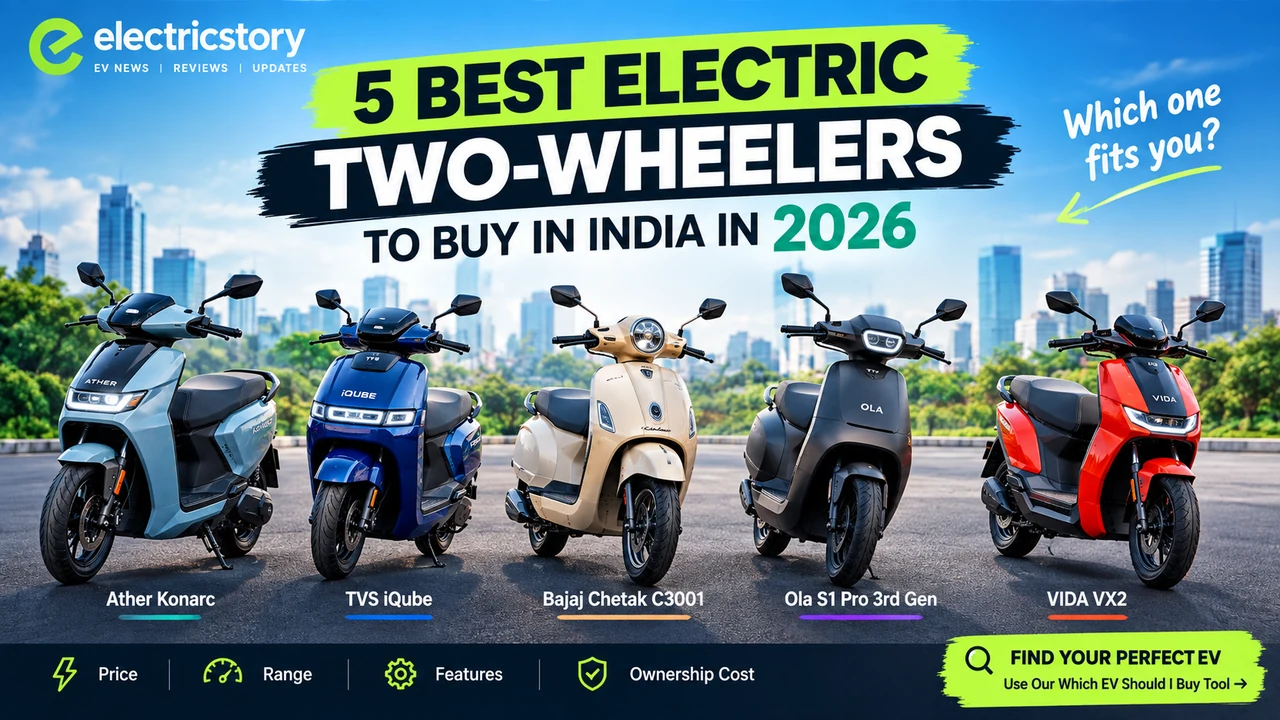
Ola, Bajaj, TVS and other manufacturers are already competing in the affordable electric scooter segment.
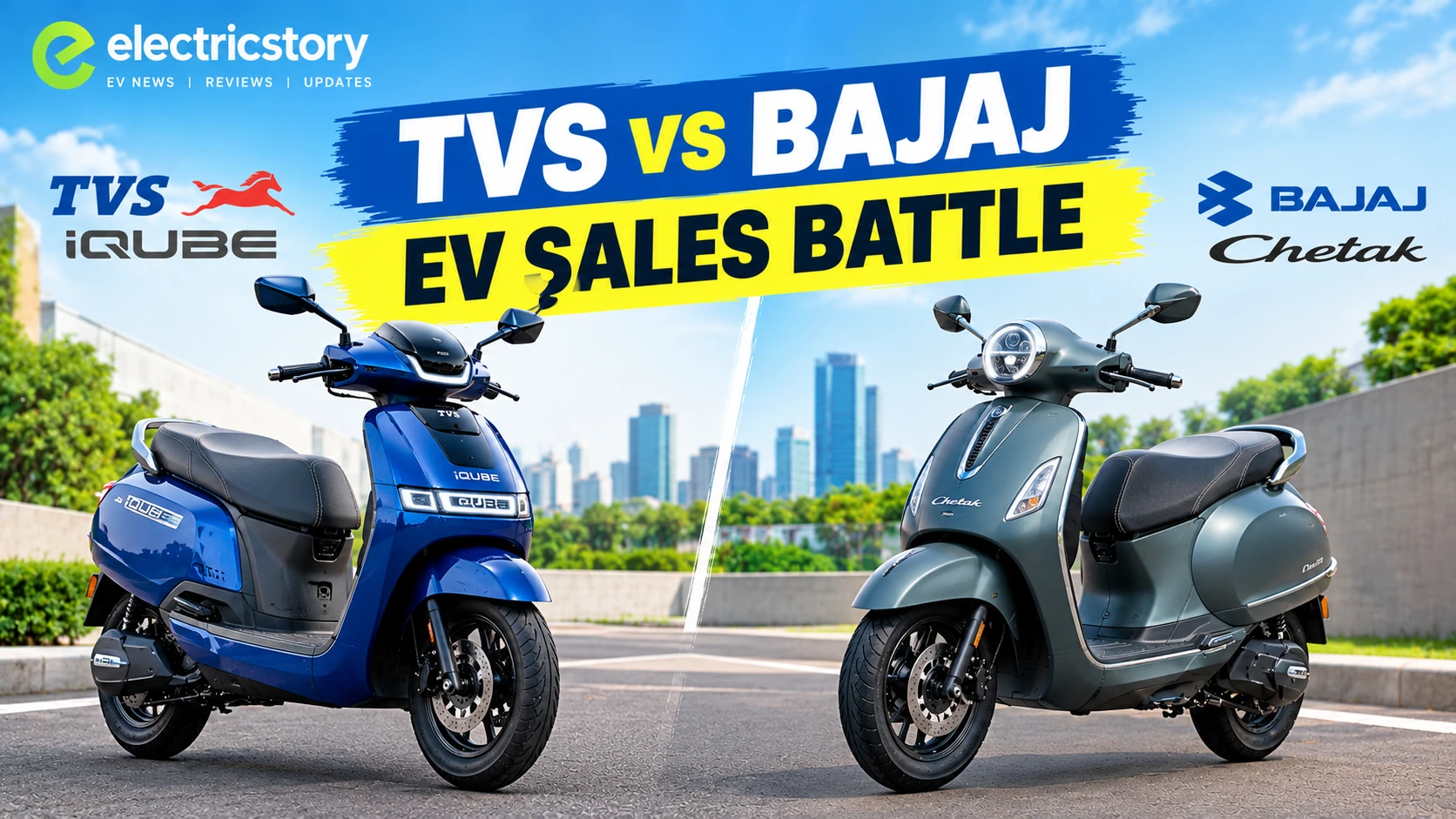
Recent market data shows TVS and Bajaj leading the electric two-wheeler market, while Ather has also recorded strong growth. In August 2026, TVS registered 48,938 electric two-wheelers, Bajaj registered 41,114 and Ather registered 28,757, according to FADA data reported by Business Standard.
Ather’s move into the sub-₹1 lakh category therefore comes at a time when competition is becoming increasingly intense.
Electric Scooters Are Getting Closer to Petrol Scooter Prices
The price difference between electric and petrol scooters is also becoming less dramatic.
Recent market analysis has highlighted how entry-level electric scooters are increasingly approaching the upfront prices of mainstream petrol scooters.
That changes the calculation for buyers.
Earlier, someone choosing an EV often had to accept a higher purchase price in exchange for lower running costs.
Now, with several electric scooters approaching the ₹1 lakh mark, the initial price gap is becoming smaller.
For high-mileage commuters, electricity and maintenance costs can then become a more important part of the purchase decision.
But There Is Still One Big Question
Can the new generation of affordable electric scooters convince petrol-scooter buyers to switch?
The answer will depend on more than price.
Buyers will look at:
- Real-world range
- Battery warranty
- Charging availability
- Service centre coverage
- Spare parts
- Resale value
- Performance
- Storage space
- Financing
- Final on-road price
A low ex-showroom price can attract attention, but the total ownership experience will determine whether customers remain with the brand.
Another New Player Is Watching India
The competition may become even more interesting.
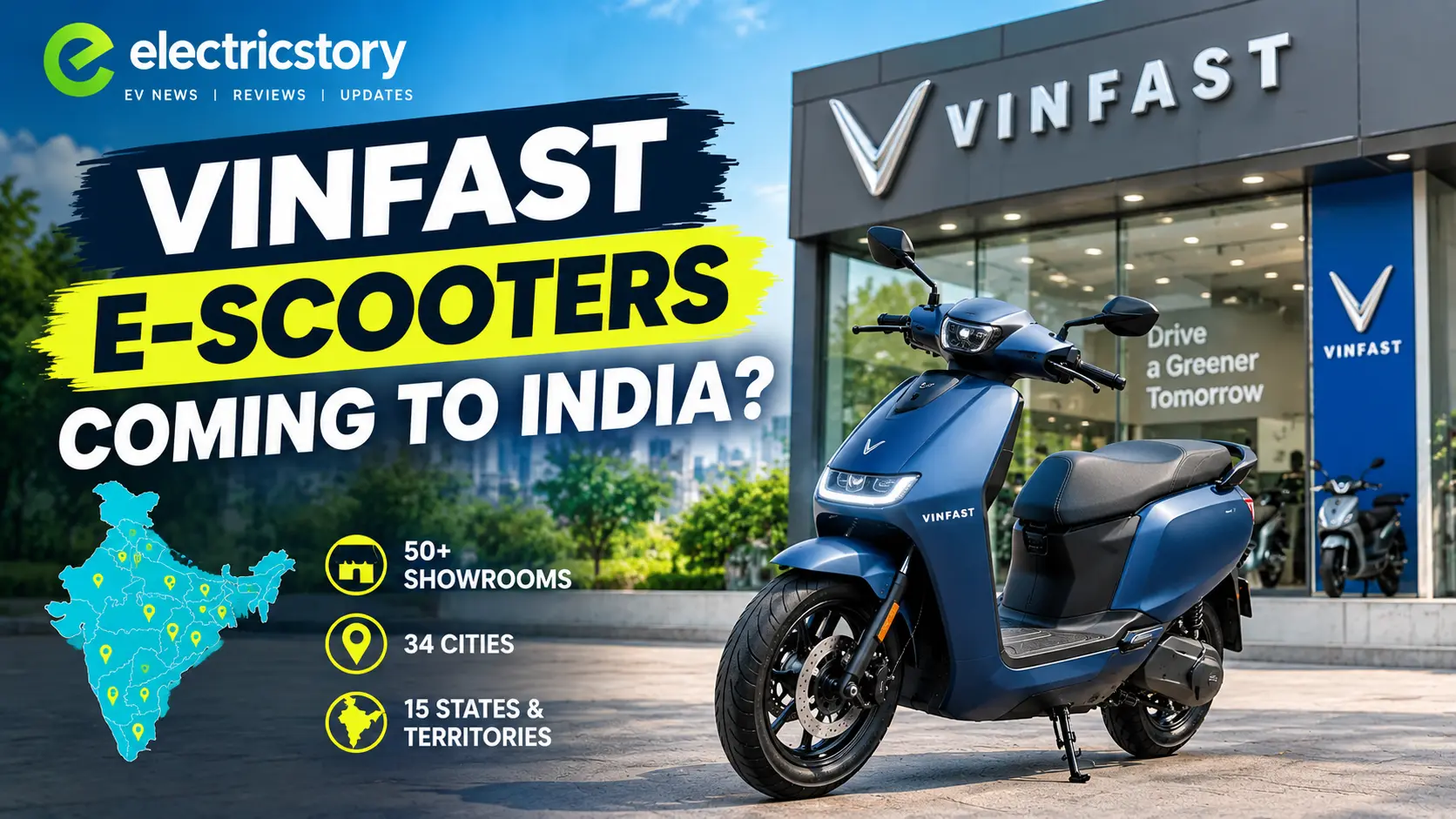
Vietnamese EV manufacturer VinFast is preparing for an electric two-wheeler expansion in India. The company has been working on its dealer network and has previously indicated plans for India-specific electric two-wheelers in the second half of 2026. However, the exact India launch date and final India-specific scooter lineup have not been officially confirmed.
That means India’s electric scooter market could see even more competition as new manufacturers enter the segment.
Government Support Is Also Continuing
Government policy remains another important factor for EV buyers.
The PM E-DRIVE scheme was created to promote electric mobility and includes demand incentives for electric two-wheelers. The government initially approved an outlay of ₹10,900 crore for the scheme, including ₹3,679 crore in demand incentives for electric two-wheelers, three-wheelers and other EV categories.
The PM E-DRIVE website also lists a 2026 notification concerning enhancement of the scheme outlay and extension of the timeline for electric two-wheelers.
However, buyers should always check the current eligibility and applicable benefit for their specific vehicle and purchase date instead of assuming that a particular subsidy amount will automatically reduce the showroom price.
What This Means for Indian EV Buyers
The electric scooter market is entering an interesting phase.
The biggest change is no longer simply the number of new models.
It is the competition for mainstream buyers.
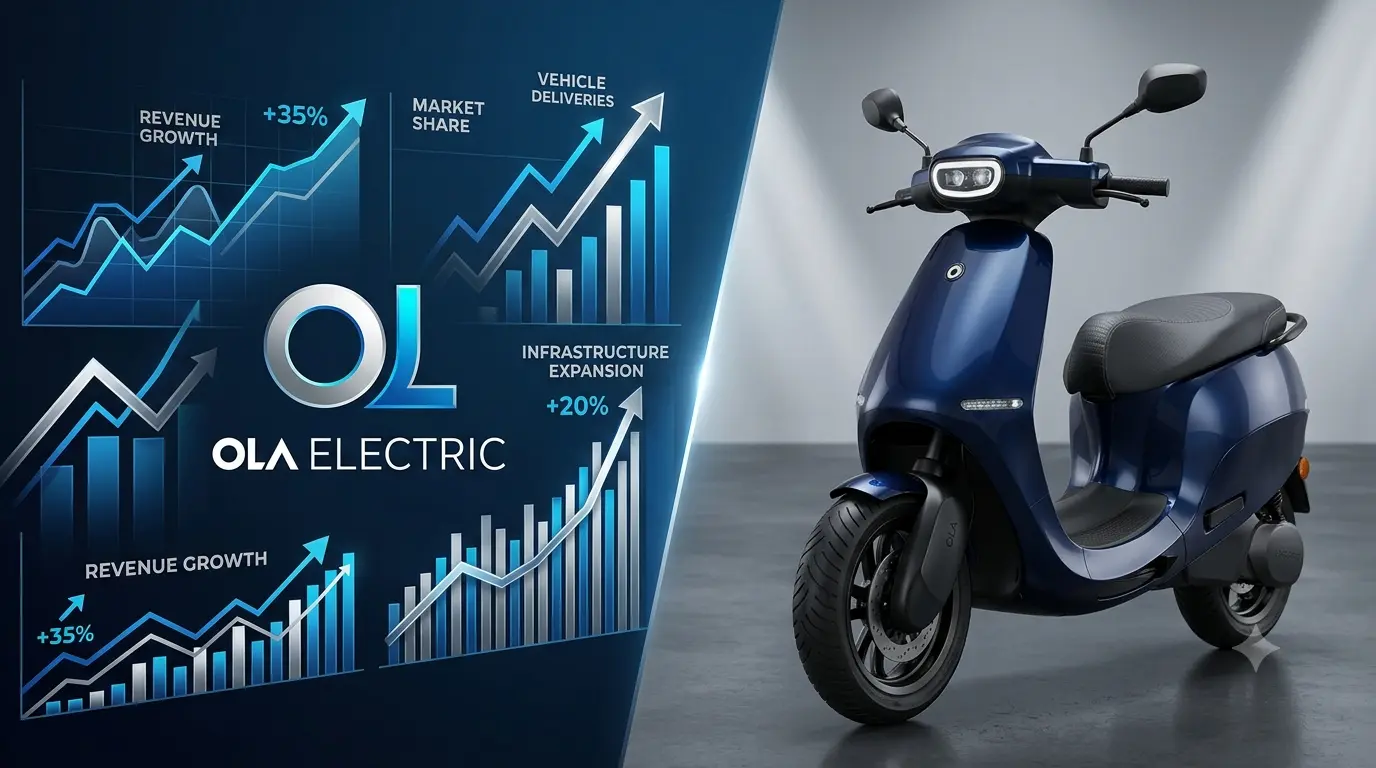
Ather is bringing its brand into the ₹1 lakh territory with Konarc. TVS and Bajaj are already selling large numbers of electric two-wheelers. Ola continues to compete in the affordable segment, while new players are preparing to enter the Indian market.
At the same time, electric two-wheeler penetration has crossed 10% of the overall two-wheeler market in recent monthly data.
That is a significant shift.
The next stage of India’s EV race may therefore be less about convincing people that electric vehicles are possible and more about convincing ordinary families that an electric scooter is practical for everyday life.
Final Takeaway
The Ather Konarc at ₹99,999 is one of the most important new developments in India’s affordable electric scooter market in 2026.
Its combination of a sub-₹1 lakh starting price, multiple battery options, metal construction, 31-litre boot space and Ather’s charging and software ecosystem makes it an important new competitor in the mass-market EV segment.
But the bigger story is the market around it.
Electric two-wheelers are gaining market share, prices are becoming more competitive and established manufacturers are fighting for mainstream customers.
For Indian buyers, that competition could mean more choices, better technology and increasingly competitive prices in the years ahead.
The ₹1 lakh electric scooter battle has officially become one of the most interesting stories in India’s two-wheeler market.
Quick Facts
Model: Ather Konarc
Starting price: ₹99,999 effective ex-showroom
IDC range: 100 km, 125 km and 161 km currently detailed; 200 km version listed in the lineup
Top speed: Up to 70 km/h for the Konarc S variants listed by Ather
Battery: 2.1 kWh, 2.7 kWh and 3.5 kWh depending on variant
Boot space: 31 litres
Body: Metal body with steel unibody chassis
Wheels: 14-inch front alloy wheel
Charging: Home charging plus Ather Grid access on applicable variants
Service interval: 12 months or 10,000 km
Manufacturer: Ather Energy